
NICK FRIEND: There aren't many Englishmen who know as much about T20 cricket as Shah: one of the format's early globetrotters. Now, he has turned his hand to coaching - he won his first competition in January and is desperate for more opportunities
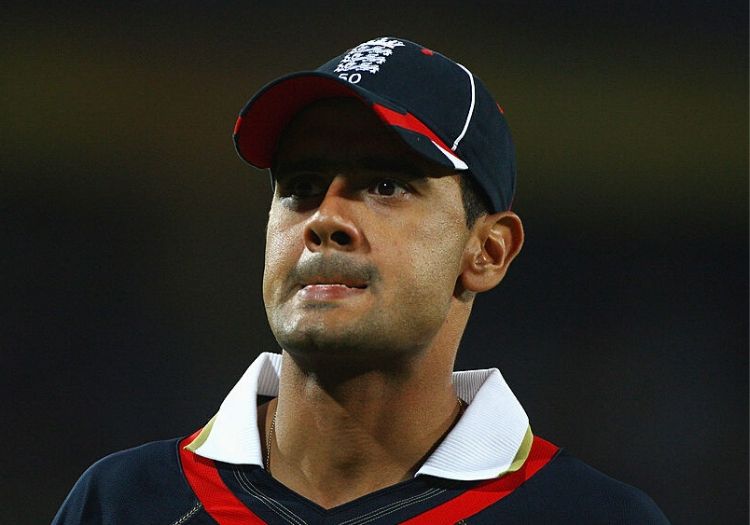

Owais Shah stops to think for a moment. It is an unusual question perhaps, but one that intrigues him. What might his peers have made of his venture into coaching?
“I don’t know the answer to that, to be honest,” he admits. “I don’t think enough people take me seriously. I like to have fun; I like to think I’m a fun character. I don’t take too many things seriously.
“But I have won some trophies: I’ve won a T20 title with Middlesex, I won three titles with the Cobras franchise in South Africa, I’m the only England Under-19 captain to have won the World Cup.”
As of January, there is a further piece of silverware to add to that list – the first of his second career, as head coach of the Rajshahi Royals franchise in the Bangladesh Premier League. It is an achievement of which he is immensely proud; you can hear it in his expression – the flame has been lit and he is hungry for more.
Shah remains a fascinating character, even five years after the last appearance of a professional career that spanned the best part of two decades. You get the sense that he believes as though he has something to prove, insisting that he is comfortable with what he achieved as a player, but maintaining a degree of lingering frustration at the way in which his time on the international stage came to an end.
Back then, it was not so much that the former batsman was ahead of his time, but rather that his focus was on a different path. There were spells in the Indian Premier League with Kolkata Knight Riders, Delhi Daredevils, Kochi Tuskers Kerala and Rajasthan Royals in the competition’s infancy as he forged himself a relative niche as one of T20’s early globetrotters, all at a point when English cricket’s priorities were elsewhere, centred around Ashes success and the quest to top the Test rankings. In retrospect, he stands as a trailblazer of sorts – Kevin Pietersen is the only Englishman to have represented more IPL teams.
He looks at the England team of today, led by an ex-teammate in Eoin Morgan, not with jealousy but with a resonant idea of how he might have thrived in an environment where unorthodoxy and freedom of spirit are actively encouraged. “Maybe I would have been appreciated a bit more playing nowadays,” he wonders. “Perhaps I’d have been given more chances. I don’t know.”
He wonders, too, whether those beyond home better grasped the breadth of his talents – the elastic wrists and the quirks of his stroke-play. Two games before his final ODI innings, he made 98 against South Africa. Twelve months earlier, he had made consecutive scores of 58, 40, 72, 66 and 62 against India and West Indies; yet, there was always a suspicion that his place wasn’t quite secure.
“If you look at the subcontinent, the focus is more on short-form cricket,” he says. “The public love that brand of cricket; I think when I played for England, the focus was the other way round. Andy Flower took over and began that journey. I loved playing for England. The only thing I’d say is that I felt that I didn’t get enough opportunity. I felt I could have got more opportunity in Test cricket.
“Also, when I was playing some consistent one-day cricket, I was axed, which was a strange thing. Something didn’t add up, but it was just the way it was. I can sleep at night though. No worries. Let’s crack on with the second phase of it.”
That is why this conversation is taking place, to discuss Owais Shah 2.0 – the makings, the ambitions and the theories of a coach. This has not come out of the blue; he has been on the hunt for a break for some time and is hugely grateful for his initial experience in Bangladesh. In an industry both niche and saturated, where vacancies are sparse and networking crucial, a foot in the door is key and a good start essential. “All that I know is I’m one from one,” he adds. One competition, one trophy. Leading a side with Andre Russell at its epicentre, impressing T20’s current king can only help.
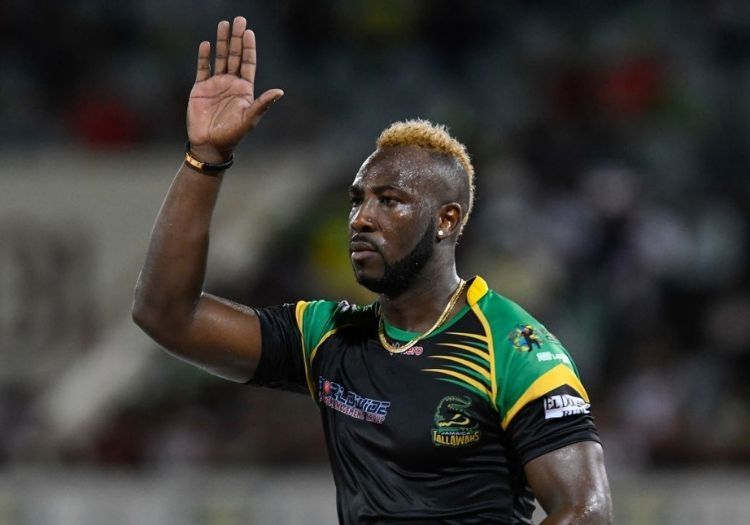
Andre Russell played a key role in Shah's Rajshahi Royals' side
The subject of Russell is an intriguing one; the thoughts of a first-time franchise coach on the circuit’s most valuable gun-for-hire are interesting. Once upon a time, the pair played together for Jamaica Tallawahs. Russell is – in many ways – the prototype of the ideal short-form cricketer: a gun fielder, fast bowler and among the most destructive hitters in the history of the format – a three-dimensional game-changer.
In 2019 alone, across all T20 cricket he made his runs in the final seven overs of innings at a strike-rate of 193.9. Against seamers, that figure rises to 202.1; in the final four overs, it increases again to 233.8.
It leads to an obvious dilemma: quite how to best utilise the allrounder. In the qualifier and subsequent final in Bangladesh, he hovered in the middle order. It was his unbeaten 54 against Chattogram Challengers from No.6 that took Shah’s side into the final. From 83 for 5 and then 116 for 6, he marshalled his team to their target of 165. The temptation, though, must surely exist to gamble on Russell higher up, to be lured into a quandary of risk and reward.
Shah, however, is both unequivocal on Russell’s role and captivating more widely on the dangers of an overreliance on auras and big names.
“There’s a reason why Ronaldo is one of the best strikers in the world,” he points out. “It’s because he plays as a striker and not as a defender. Lionel Messi – same thing. There’s a reason why these guys are good in their position. You can’t have Ronaldo or Messi defending, so why have Andre Russell batting at No.3 when he’s the best No.5 or No.6 in the world? That’s the thing.
“I know a lot of the time one man can win a game of T20. But I don’t really think one guy can win a whole tournament. There are certain roles that other guys have to perform in order for the team to function properly. Andre will come in and do his thing, of course. But you can’t have other guys that are almost saying: ‘Well, if we don’t do it, Andre Russell will do it.’ It doesn’t work like that.
“That’s probably a bit of a challenge for teams when they have big players like Russell or Gayle or de Villiers. These guys will perform – yes, they are the top names in the world. But don’t forget, there are ten other guys who need to bloody perform if you’re going to go on and win a tournament.
“These guys might turn it on in a big game and you might turn to them and say: ‘Come on, I need you today.’ That’s fine. But they’re not supermen – you can’t expect them to win you a tournament and perform every single game. You have to have a squad and a team and recognise what kind of core of players you want to play with. And then you build your squad around that core.”
Shah is something of a rarity: an Englishman coaching on the franchise circuit – a commodity few and far between. Rarer still, an Englishman winning on the circuit.
“I’ve asked to do other tournaments, but never really got lucky. I guess this time, I don’t know, maybe they felt sorry for me,” he jokes. “Maybe they thought: ‘Let’s give him a try. He’s asked enough!’
“I’m just really thrilled to have had the opportunity to go out there and try to pass on the knowledge. I was so happy to win – the first tournament I’ve ever coached. To go on and win it, I can’t believe it really. I was over the moon. There aren’t many coaches on the T20 circuit.
“Also, coming from an ethnic [minority] background myself, I don’t think there are many coaches with an ethnic [minority] background in England – let alone in T20 – in the professional game. I can’t think of a county coach who’s Asian or of ethnic [minority] origin. If I can get some opportunities and carry that flag, I’d love to see where it takes me. Why not?”
🏆 #RajshahiRoyals
— Rajshahi Royals (@RajshahiRoyals) January 17, 2020
Champions of Bangabandhu BPL 2019-20#riseofroyals pic.twitter.com/gmndUCbpv7
The addition of a major title to his résumé can only help his cause as and when cricket returns. It was fitting that he should begin as a coach in Bangladesh, the venue of his final game as a professional player.
Perhaps it is because of the way in which his international career ultimately fizzled out, but it feels all too easy to overlook Shah in the pantheon of England’s white-ball cricketers of the 21st century. At his peak, there have been few graced with more natural talent. Even his Test debut began with 88 in its first innings.
Aside from stints in the IPL and BPL, he has played T20 cricket in Australia’s Big Bash, New Zealand, South Africa and the Caribbean Premier League. Not many have the depth of his CV or his breadth of knowledge to pass on: 230 games across 12 years.
He speaks of the winter with an unshakeable enthusiasm, genuinely chuffed with how it went. As well as Russell, his squad included Ravi Bopara, Shoaib Malik and Mohammad Irfan – a quartet full of knowhow.
“There would be times when I’d think I wouldn’t mind strapping my pads on, walking out there and hitting some of the spinners all over the ground,” he laughs. “So, you do have to remind yourself that your time is over and now you just have to try to help the guys win a cricket game.
“That’s my job. It took me a few games, a few net practices to get over that, for sure. It’s something you’ve loved doing and have done for a long time. It’s hard to let go, but you have to make peace with yourself on that. Cricket is done. This is another phase of my life that I have to give a good go. That was a mental challenge.
“I was almost pinching myself; I remember the drive to the ground for the qualifier. As a player I never really felt the pressure of something like that, but I do now because I can’t actually go and physically do something about it. It’s over to the players. I can just prepare them as best as I can and pass on as much knowledge as I can to try to keep them calm under pressure.”
Shah turns to the notion of fear and – more pertinent – fearlessness. It is the mindset he preaches throughout; it forms part of his desire to watch his teams attack. He talks frequently about a specific “brand of cricket” – a cliché of sorts, but elaborated on here.
“You have to get to know each individual player and you have to try to understand – in a very short space of time – what kind of personalities you’re dealing with. And then, you have to try to help them to play that brand of cricket.
“That was my thing that I found in the winter; it’s not about: ‘This is how I did it, so you should do it this way.’ For me, it was: ‘I believe that we’re here to win. However you can bring success to the team, you need to find that way – whatever works for you. If you need to block 20 balls and that gets you going, we’ll have a discussion about it and we’ll come to a solution that benefits the team. If that’s the best thing for the team, let’s do it.’
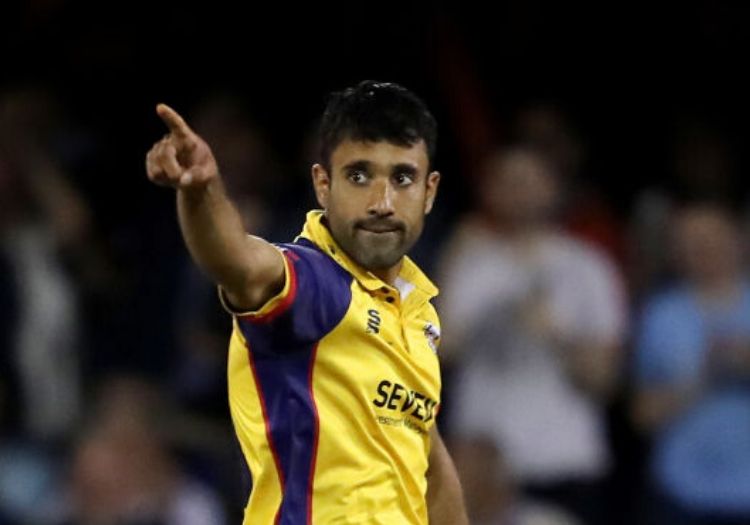
Ravi Bopara was another at the core of his title-winning team
“All you can do is get your players into the best frame of mind to perform. At the end of the day, the player has to perform. I can’t perform for the player; I think the player will always take responsibility but mentally, I can get them in the right frame of mind.
“I might not get the whole eleven in the correct frame of mind. Sometimes, I might get eight or nine – I’m not a magician, where I can tell them to do this and all eleven follow the game pattern. It doesn’t work like that; if you can get the majority playing the right brand of cricket, you should come out on top more often than not.”
Providing clarity, he believes, is the crux of his role. It is why he is so captivated by the sheer amount of data available to him in this day and age. If he has not scoured it all and passed on every possible nugget of assistance, then he has sold his players short.
He recalls his IPL days – at a time when it remained the sole competition of its kind. It was more difficult to plan, harder to come up with individual strategies, there was less homework to be done because less detailed analysis existed. “The only time you were playing against someone like Chris Gayle was in the IPL,” he explains. That has long-since changed, however.
“There’s so much attention to detail. I believe it’s so important; it can give me the edge. If you don’t do your homework and you don’t know that the opposition have got a player who can hurt you and you’re out there watching the game and that player is hurting you, you are not in a good space.
“You know that there is data out there about that particular player who is hitting your team everywhere or bowling your team out. Then, I have not done enough to give my team all the information to think: ‘This guy can bowl it there or hit it there, so you should look to hit him there or bowl there.’ Say, a batsman’s playing really well – I can help my team. Rather than him striking at 160, he’s only striking at 120 or 110; we’re keeping him quiet and doing a good job.
“Those are the subtle advantages that you have in the game nowadays – you need those. There are so many good players in the game now who can hurt you. Before you know it, the game has gone. You have to do your homework.”
This is Owais Shah 2.0. He gets it, you sense. It has taken him longer than he would have liked to reach this stage and to be given a chance to prove himself but, in a world where first impressions count, he has done all he can.
“Let’s see where coaching takes me,” he concludes, his voice led by an infectious gusto. “I would love some more opportunities.”
The ambitious final words of a man to be taken seriously.
To remind ourselves of happier times we’re offering a £20.19 subscription to celebrate England’s World Cup win once again. Click here to claimowais

Welcome to www.thecricketer.com - the online home of the world’s oldest cricket magazine. Breaking news, interviews, opinion and cricket goodness from every corner of our beautiful sport, from village green to national arena.