
NICK FRIEND: Nobody knows the women’s game better than Clare Connor, charged simultaneously with the enviable task of leading a major domestic restructure and the unenviable duty of steering the sport through the next weeks and months
Come tomorrow, exactly two months will have passed since Australia retained their T20 World Cup title in front of a crowd greater in number than the tournament’s previous six finals combined.
Needless to say, much has happened since. “It does feel like quite a distant memory,” Clare Connor, the ECB’s managing director of women’s cricket, reflected on Wednesday.
A festival of the women’s game on International Women’s Day, it was a momentous occasion – at a simpler time, it was everything that social distancing isn’t.
The Melbourne Cricket Ground was its historic setting: an arena where prior to March 8, the previous record attendance for a women’s game was just 7,028. Eleven years ago, 2,300 people watched the 50-over World Cup final at North Sydney Oval.
In the aftermath of Katy Perry’s set – a surreal conclusion to a remarkable day, I framed a piece looking back on the competition and all that it symbolised with a single sentence.
Things will never be the same, I wrote.
At the time, they were words constructed out of a joyous optimism, reminiscing of a fortnight that set a new marker, portrayed a new norm and showed what could be achieved with a little ambition and a considerable amount of commitment and infrastructure.
Now, sat in my front room, those words have taken on an almost prescient feel. Little did we expect then what we know now.
India, beaten finalists and boasting some of the planet’s most exciting young talent, would be touring in June. South Africa, conquerors of Heather Knight’s side in a group clash that ultimately – albeit indirectly – ended England’s campaign in a washed-out semi-final, would visit for a white-ball series at the back end of the summer. Both still might, of course. The Hundred, for all its controversies, would align men and women under the roof of a single competition, with the added lure of free-to-air television. That won’t happen now, not until 2021 in any case.
In the grand scheme of the planet’s current state, a cricketing summer is scant price to pay. As Connor emphasised during a Zoom conference yesterday, there is no good time for a pandemic to strike. “There are bigger things at play,” she said, “much more important things.”
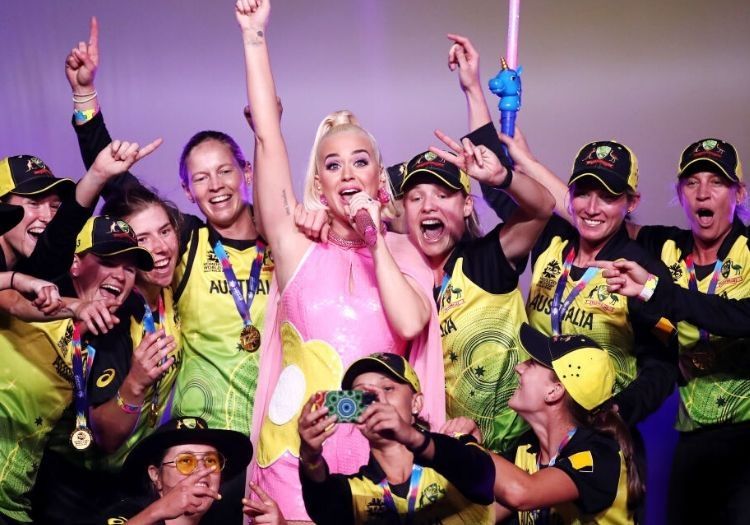
It is hard to believe that the T20 World Cup final was just two months ago
Her disappointment, however, at the timing of this enforced hiatus was clear to see. So much impetus to build upon, a set of genuinely exciting plans ready to be put into action – neither will vanish, but nor will they have the immediate impact they might have had in different times, both riding on the back of a global buzz that stemmed from the MCG.
“All we can do is continue to build on the momentum we have got, which isn’t insignificant,” Connor said. “The county payments have gone out through the county partnership agreement for girls’ county age group cricket.
“That’s a huge increase on recent years. Whilst no activity can be taken place at the moment other than calls like this, that funding is now real. And it has reached the counties who need it. The whole plan is up and running and I think that is really important to stress.”
At a time when transparency among leaders is required perhaps more than ever in recent memory, Connor was present to provide it. Nobody knows the women’s game better than the managing director and former England captain, charged simultaneously with the enviable task of leading a major domestic restructure and the unenviable duty of steering the sport through the next weeks and months.
She spoke with just the right combination of realism at the challenges posed by the current situation, hope for play of some description before the end of the summer and concern at what this all means at grassroots level.
That third point hits hard, especially on the back of the scenes at the MCG; what better way to bring in the new season than with those memories. It is similar to what the men’s game will face on the back of last year – the World Cup, the Ashes, the summer of Ben Stokes. There is no denying that momentum will be lost.
“For me it is the saddest part of all this,” Connor admitted, looking to the recreational game. “With the amazing weather we have had, knowing that more women and girls were going into this season more inspired than ever before to play makes us feel sad.
“We could suffer great losses regardless of the financial losses this summer. We could face that loss of participation and women and girls who had just had their appetite whetted who aren’t going to be able to experience that this year.”
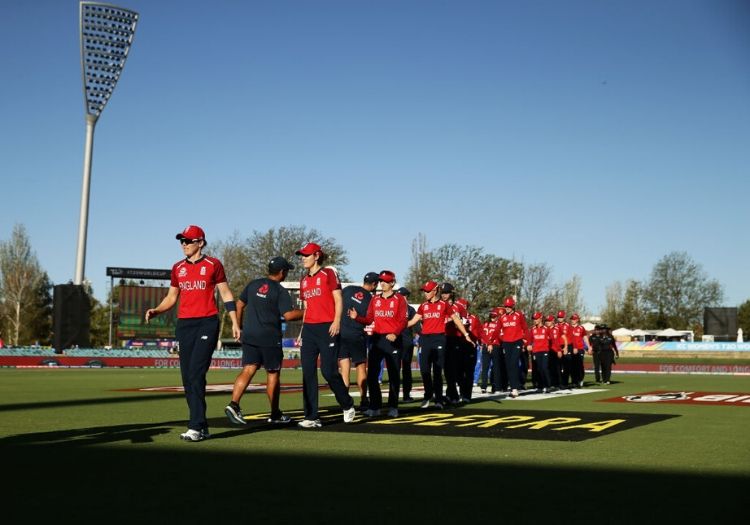
Connor spoke honestly about what this season holds for the women's game
The flipside, of course, will come when society does eventually return to some normality. Connor is leading a workstream at the ECB called Together Through This Test, looking specifically at how cricket is bringing communities through this crisis – whether through health, mental health, physical health or education. It will launch properly in the near future.
“It’s been the one of the most inspiring things I have ever worked on,” she said, “to see the opportunity and the passion that exist and how cricket can bring people together and make a difference.
“Ultimately it goes back to our purpose as a sport which is to connect communities and improve lives. If there ever going to be a time when that’s needed, for a sport to be able to genuinely to live its purpose, hopefully we will get that opportunity.”
In an interview on Wednesday with the Daily Telegraph, former FA director Heather Rabbatts explained why she felt women’s sport would make a positive, emphatic return from Covid-19.
“When we hopefully all emerge from this, I think that actually the role of women’s sport will be even stronger,” Rabbatts said. “I think that one of the things we’ve all missed is sport. Women’s sport was gathering momentum – particularly women’s football – before the pandemic. I think that momentum will quickly pick up once we are able to resume play.”
It was good, therefore, to hear Connor speak openly on the importance of the 40 full-time domestic contracts, the existence of which were announced in October when the ECB – led by Connor – revealed its five-year investment plan for the women’s game.
They are still in the offing, which is essential – there will be more news on them in the coming period. As she stated repeatedly, it is important that the national governing body makes it clear that it is there for its players, even through a confusing, extraordinary, sparse summer.
In the short-term, the deals will allow those selected to work on strength and conditioning programmes in conjunction with their regional hubs, while also allowing them to complete online modules in anti-corruption and anti-doping. A mentoring scheme with centrally contracted England players is also being looked into for some of the youngsters likely to be coming on board.
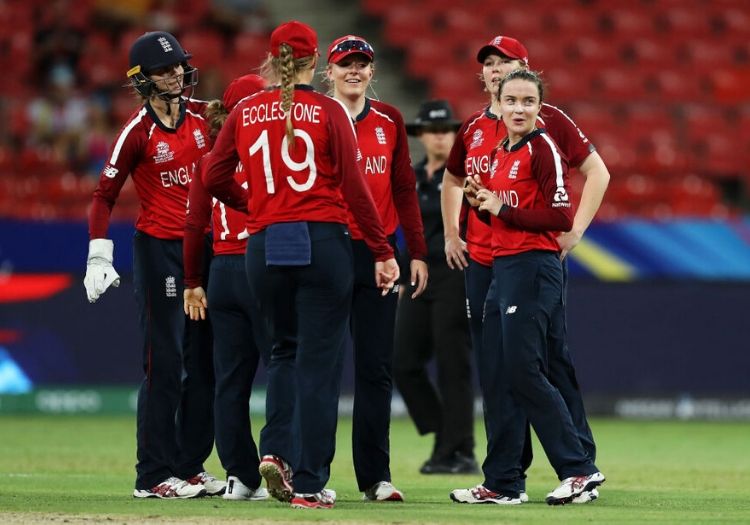
The ECB still plans to offer its 40 domestic deals in some form this summer
“There’s not much more we can do to that,” Connor added, “but with a view to having all 40 on full-time contracts, ready for the winter, to start full-time training and go on to next year.”
That is the reality of the summer: there is only so much that can be done. Connor was nothing if not brutally honest about what comes next. If international cricket does become a playable option, it is likely that the men’s sphere will take priority.
Quite simply, faced with a worst-case black hole of £380m should the entirety of the season be wiped out, the more men’s international cricket that can take place, the less grave the financial implications for the entire sport – men and women, boys and girls, top to bottom.
Connor was equally at pains not to rule out the possibility of international women’s cricket, insisting that the women’s game forms part of the behind-closed-doors project being led by Steve Elworthy.
“I would be devastated if there was no international women’s cricket this summer,” she said. “No one would be more disappointed. I do believe that we have got this period to get through and we have all got to come out of it as healthy in every way as possible.
“We need to safeguard future investment into the women’s and girls’ game to deliver these plans to transform it which are from the grassroots through to the elite professional players that we want to build in number.
“And so, if we have to play less international women’s cricket this summer to safeguard the longer-term future and investment and building the infrastructure for a more stable and sustainable women’s game that is probably a hit we might have to take.
“I am pretty sure that the board and all of my senior colleagues are going to be very committed to getting some international women’s cricket on. We don’t want a summer where we don’t show it to people and where our players don’t get to play and we don’t get to carry on inspiring more people to follow it and play it. But we have got to be realistic.”
In the meantime, you could do worse than to look back to March 8 and Melbourne – a celebration for the ages, somehow only two months in the past.
To remind ourselves of happier times we’re offering a £20.19 subscription to celebrate England’s World Cup win once again. Click here to claim

Welcome to www.thecricketer.com - the online home of the world’s oldest cricket magazine. Breaking news, interviews, opinion and cricket goodness from every corner of our beautiful sport, from village green to national arena.