
NICK FRIEND: No team had ever lost its first three World Cup matches and still qualified for the semi-finals, so England's comeback – masterminded by the inherent calmness of captain and coach – deserves plenty of credit and respect
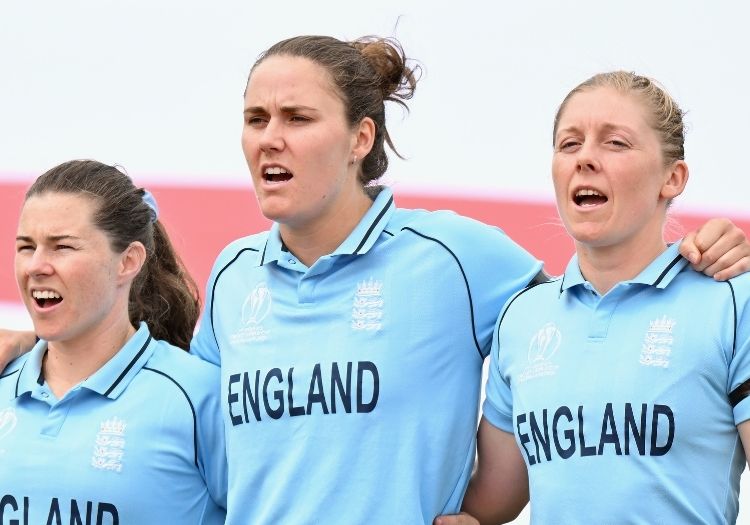
"If you had given me this situation two weeks ago, I'd have bitten your hand off," said Heather Knight. "It's been a remarkable turnaround."
Rewind a fortnight and England's lengthy, difficult winter looked like finishing prematurely – on the world stage – in miserable fashion. Never before had a team started so poorly and reached the last four. They had been beaten by South Africa, now semi-final opponents, in the third of three ragged displays, characterised by dropped catches, soft dismissals and a generous smattering of extras.
And yet, here they are, having lived to fight another day: Thursday, two wins from a successful defence of their World Cup crown. That eventuality remains a long way off for now – after all, Australia earned the right to be pre-tournament favourites and, in going unbeaten through an otherwise jeopardy-ridden group stage, have done nothing but reaffirm the accuracy of that label. Should they overcome West Indies in the other semi-final, Meg Lanning's team will lie in wait.
England were always favourites to ease past Pakistan, to whom they have only ever lost in a single T20I, and Bangladesh, for whom this was a first meeting in ODI cricket.
But the wins against India and New Zealand were hard-fought, excellent efforts – and both ultimately far closer than they ought to have been, having rather stumbled over the finishing line in each.
They showed the hallmarks of a team whose unity has never been in doubt, led by a senior core and improved by the effervescence of youth – it shouldn't go unnoticed that three of England's most important players in forging their momentum are playing in their first 50-over World Cup: Charlie Dean, Sophia Dunkley and Sophie Ecclestone.
Of course, Ecclestone is an outlier in that regard, and Knight admitted to occasionally forgetting quite how young her left-arm spinner is. She's the leading wicket-taker in the tournament, with the best economy rate of anyone to have bowled more than 16 overs. The ICC rankings take frequent, well-merited stick, but Ecclestone's coronation as the world's best bowler in both white-ball formats is justified.
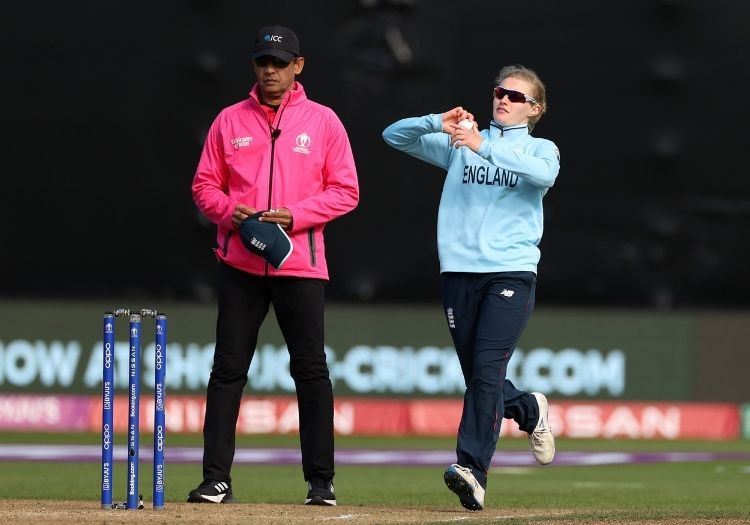
Charlie Dean has claimed 10 wickets in just four matches at the tournament (Fiona Goodall/Getty Images)
"She's been around for a long time," Knight added, "and the way she handles those big occasions and wants to be the bowler who bowls in the big moments and takes those wickets." No one in the women's game has taken more wickets in the middle overs since the culmination of the last World Cup, and there isn't another bowler in this competition against whom teams are so willing to simply survive. Perhaps breaking that mould has been Australia's most alpha move of the last month; on a flat surface, Ecclestone was taken for 77 runs – the most expensive white-ball spell of her professional career. Since then, her tournament figures look like this: 14 for 144 in 57.3 overs.
Like with Sarah Glenn and Mady Villiers before, Dean has dovetailed beautifully with her fellow, more storied spinner. Other than Ecclestone, only South Africa's seam-bowling pair – Shabnim Ismail and Ayabonga Khaka – and India's Rajeshwari Gayakwad have taken more wickets than the 21-year-old off-spinner, who has only played four games thus far and is averaging exactly a wicket every 20 balls. No one among the tournament's 50 most prolific bowlers have claimed their scalps more cheaply: Dean has picked up her victims at 12.3 apiece.
For Knight – not to mention the regional structure through which Dean has developed in the last two years – that represents a major positive. "Sometimes, going into these big world events, you don't know how players are going to react," she said. "To see those young girls taking on the challenge and rising to it has been so pleasing, and I'm sure Thursday will be no different."
Knight has long been an impressive leader, aided by an inherent sense of composure, and it is easy to imagine how that particular quality has come in useful as this urgent reset has taken place.
"Credit to everyone in the group, all of the staff," she said. "We're in a good place and we've obviously built a little bit of momentum in the last few games. I feel like we're peaking at the right time, hopefully."
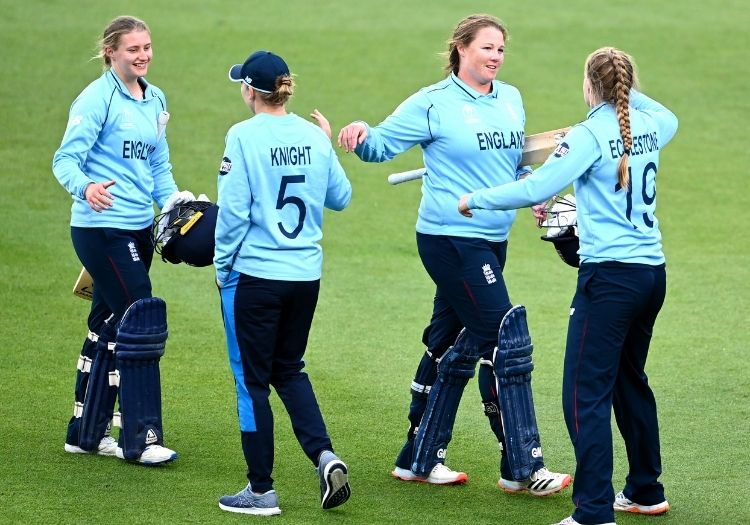
England's late collapse against New Zealand almost ended their tournament, but for Anya Shrubsole and Charlie Dean's last-wicket partnership (Hannah Peters/Getty Images)
Honesty has been at the heart of that: between beating New Zealand at Canterbury in September – in arguably the most complete performance of the Lisa Keightley era – and getting on the board with the win over India six months later, England hadn't won a competitive match. The cancellation of the Pakistan tour meant there was no cricket until the Ashes, which ended without a victory for the visitors. So, "getting back into the habit of winning" was an important – and not altogether straightforward – first step.
"We'd kind of got out of the habit of winning and what it takes to get over the line in those tight games," Knight explained.
How did that fix itself? "Not panicking, to be honest."
Significantly, England never shied away from their errors in three losses that all featured considerable elements of self-destruction. "We were very disappointed and frustrated with how things had gone, but I think realising there was still a good chance of us qualifying was quite important. Also, realising that a lot of things that hadn't gone our way in those close games were things that were under our control – things like fielding and extras."
Indeed, for all the talk of Laura Wolvaardt's recent form, England appeared to have sussed her out in the group game, hanging the ball wide of off-stump and packing the area either side of backward point. She promptly spooned a catch to Tammy Beaumont – one of the team's best fielders – but was shelled, before continuing to a match-winning half century.
England conceded 20 extras that day, having earlier shed 25 and 28 in the defeats by Australia and West Indies. Since then, there have been just 34 in four games. The fielding, still not perfect, has skyrocketed nonetheless: Amy Jones, so often impeccable behind the stumps, has quietly led that revival, while Knight herself plucked a one-handed screamer at short cover to catch Lea Tahuhu. Dunkley, so good at counterattacking from No.6, set the tone by diving forward to catch Mithali Raj against India. Immediately afterwards, Kate Cross threw the stumps down to run out Deepti Sharma, and England were alive again. A far cry from the gifts handed to Wolvaardt and Deandra Dottin that proved so costly.
"Trying to keep positive around the group, I think, was really important," said Knight. "You don't want to go crazy and make a huge deal out of it – you're just desperate to turn it around, and I think you do that by remembering what has made us a very good team, what we do really well and trying to execute that."
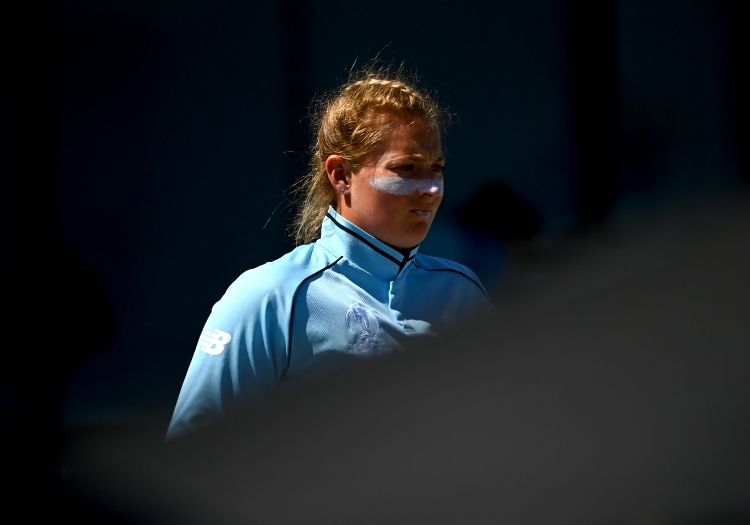
Sophie Ecclestone is the tournament's leading wicket-taker (Hannah Peters/Getty Images)
Most of the team opted not to train between the South Africa and India games, choosing instead to step back. Sometimes, that is the best way.
Amid the criticism that came with those early performances, it is worth remembering that none of these players have seen home since early January. And even then, the risk of catching Covid over Christmas meant the entire squad spent the festive period effectively under lock and key. One player had to flee her family home when a relative tested positive on Christmas Day.
Since then, England has opened up: isolation and marks are no longer compulsory, people are talking of a post-pandemic summer. Yet, Knight's team have spent every minute of 2022 under restrictions of some description. In future, it feels difficult to believe that this period won't be marked with an asterisk, with the final week of the Ashes series perhaps the most fraught with danger, such were the complications of testing positive so close to entering New Zealand.
That needs saying, not only to offer some mitigation for England's slow start, but also to highlight the character they've shown since. When Glenn made the decision to opt out of her spot as a travelling reserve, Beaumont told The Cricketer that, faced with the same scenario, she would have done exactly the same. It is clear that this winter has come with its mental challenges.
But now, England can count down towards the flight home and a return to something closer to normality. Before then, they have a unique chance: to become the first England side to retain a World Cup. Facing South Africa in the semi-final means a repeat of 2017, when Anya Shrubsole crashed the winning boundary with two balls to go. It was the sort of nerve-wracking finish that would hardly have looked out of place in this tournament, where nail-biting chaos has often been the order of the day.
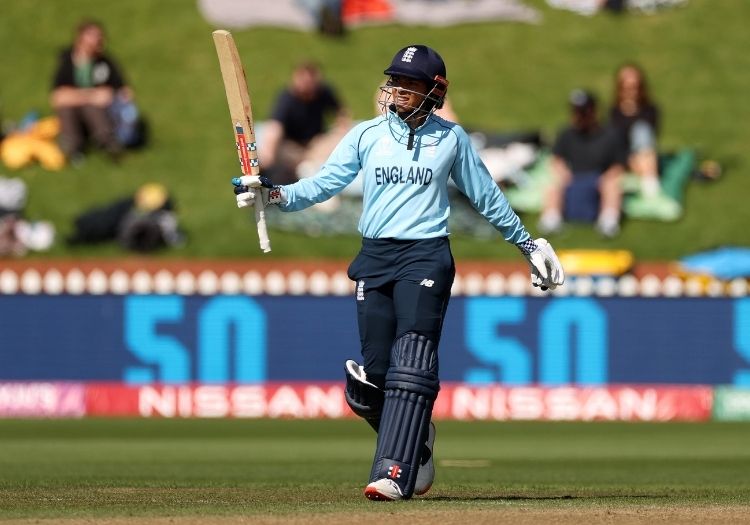
Sophia Dunkley has consistently scored runs at No.6 (Fiona Goodall/Getty Images)
Knight, ever-respectful, singled out the "outstanding" Wolvaardt, as well as Marizanne Kapp's potency as the Proteas' finisher among their obvious strengths. But she was also careful to mention a fine seam attack that has "really put their mark on world cricket" and Lizelle Lee, who is yet to fire in this competition but holds a sterling record at the top of the order. Shrubsole, who is fit after missing the win over Bangladesh, cleaned her up in the group stage – a wicket for the analysts, who have highlighted Lee's weakness against in-swing.
"They're a quality team and they've played some really good cricket in this tournament," added Knight. "They're going to be really tough to beat, and we're going to have to bring our best cricket.
"We know they've got world-class players and if you give them a second chance they're going to make you pay. Hopefully we can get a bit of revenge on Thursday.
"I think we're in a very good place. We still haven't played our very best cricket yet, which is more exciting and something we feel like we're building towards hopefully at the perfect time.
"The really pleasing thing is we've reacted brilliantly to knockout games. We've obviously been playing knockout cricket since the fourth game, so to be able to deal with that is great for going into a semi-final and having that mentality. To have the pressure on you, knowing that if you lose you're out, we've had that for a while now."

Welcome to www.thecricketer.com - the online home of the world’s oldest cricket magazine. Breaking news, interviews, opinion and cricket goodness from every corner of our beautiful sport, from village green to national arena.