
NICK FRIEND AT EDGBASTON: The Edgbaston playing area was buried all over with covers – more than had ever been laid down at once in the ground’s history
For a long while, a bizarre season looked like it might culminate in a fittingly strange end. By spilling into a reserve day for first time in the competition’s history, English cricket was already swimming in uncharted waters.
The rain was relentless. Swimming, as the joke went, might prove a useful tie-breaker. By Sunday morning, Edgbaston had been rained upon for 55 of the previous 56 hours. Head groundsman Gary Barwell tweeted to reveal that more than 75mm had fallen in that time.
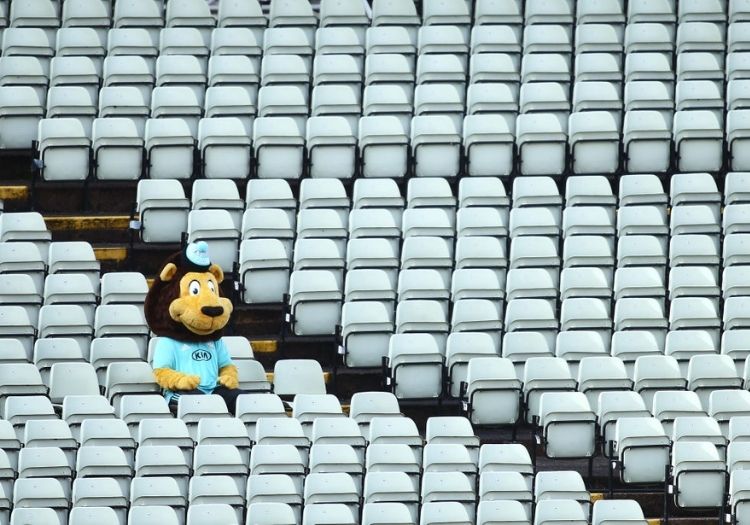
The annual mascot derby – albeit a watered-down version featuring just the four semi-finalists – was the first casualty of the weekend, called off at 11am.
And so, it was a miracle really that there was any cricket at all come 3.15pm. Certainly, until it was agreed on Saturday evening that Wednesday could be called upon as a last resort, the prospect of a series of bowl-outs seemed the likeliest outcome.
At times, Sunday threatened to become ‘one of those days’ in a way that Saturday never once was. For, Saturday was bleak – both in forecast and reality. Leading up to the weekend, Armageddon was promised, and Armageddon was delivered.
Leaving the confines of the media centre when play was finally abandoned for the evening offered a timely reminder of the October elements.
It was desperately wintry, with a heavy breeze and a Baltic feel, water dripping from every ledge. At times, the groundstaff made a sodden trudge out to the middle, sweeping rain off the covers as more tipped down simultaneously – the very definition of heroic futility, acted out before our eyes, like raking away leaves in the midst of a tornado.
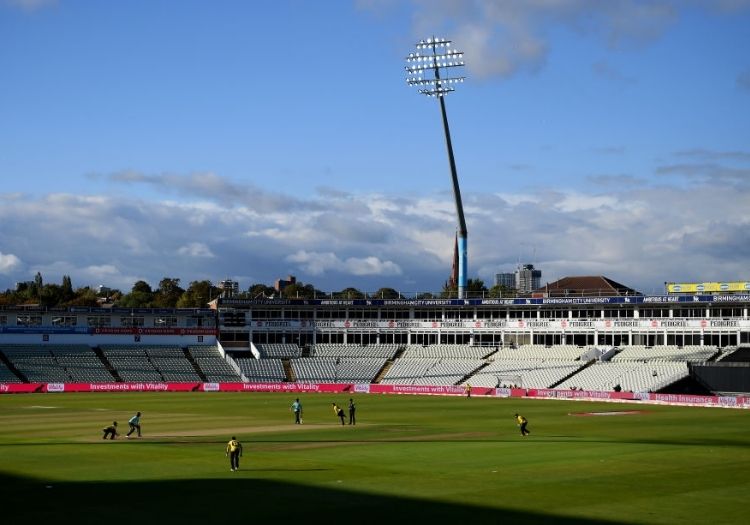
Edgbaston was a picture by the time play finally began
Among the precedents broken in the staging of these finals – the first time for 156 years that professional cricket has been played in England during the tenth month of the year, another record encapsulated the occasion: the Edgbaston playing area was buried all over with covers – more than had ever been laid down at once in the ground’s history.
When the first one was removed just after 9am on Sunday, there was another underneath, with hatches firmly battened down.
Once a midday inspection was lined up, the clean-up operation took place in instalments. With the covers nearly off and the afternoon forecast set fair, the heavens opened again. The Birmingham skyline provided ass useful a weather gauge as any forecast; when it was firmly visible, all was safe; when it disappeared behind torrents of steady showers, they soon reached Edgbaston.
The sheets were dragged on and off three times before anyone had seen the pitch itself, with the first inspection curtailed when some of the day’s heaviest rain arrived briefly. It quickly passed and, when the clouds lifted, the sky brightened with the announcement at 2.40pm that the semi-finals would begin 35 minute later.
There was a smattering of sawdust present on the practice pitches on the edge of the square, but otherwise Edgbaston had largely survived a two-day deluge.
From there, Gloucestershire lost an important toss and began their innings poorly, with just 12 runs coming in a 3.2-over powerplay. Miles Hammond used up 11 balls – exactly a sixth of the innings – for just a single as the Bristol county scratched around on a tacky, slow surface that turned from the start and made run-scoring a taxing task, before improving as the evening wore on.
When they had last batted at Edgbaston a month earlier against Birmingham Bears in another rain-affected affair, Gloucestershire romped to 157 for 3 in just 12 overs. Only two days ago in their quarter-final demolition of Northamptonshire, they produced as clinical a performance as anyone might wish to find in T20 cricket.
Faced with an array of different, extenuating circumstances, they were unable to repeat the trick. Three boundaries in the first over of Surrey’s riposte knocked the requirements down to almost a run a ball, from which Jack Taylor’s side could never recover.
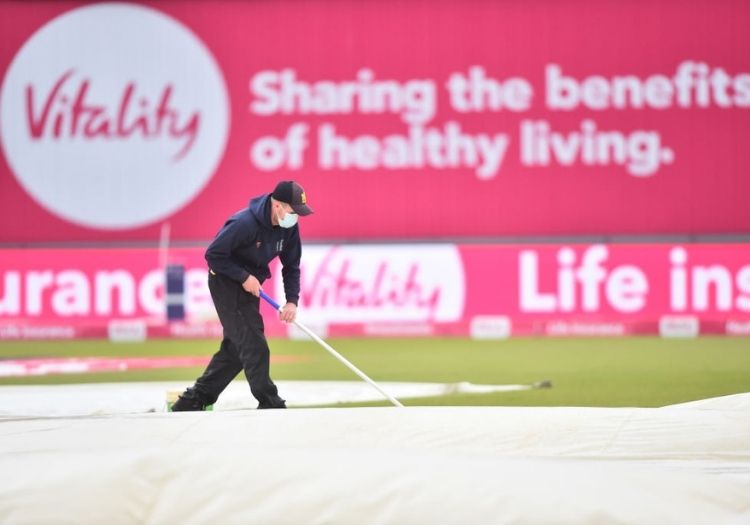
The Edgbaston groundstaff did a fine job to ensure that T20 Blast Finals Day didn't seep into a second reserve day
“We didn't quite sum up the conditions, I reckon we only need 15 more runs,” he said afterwards. “We are a quality T20 team but unfortunately we didn’t turn up today.”
They could look back upon a long wait: the first ball was bowled 28 hours later than initially scheduled, while the turnaround was sharp once the playing conditions were confirmed.
Lancashire, likewise, lost after batting first. Their defeat owed less to a failure to read the pitch, but more to a lack of batting depth that meant just 33 runs came in the final 25 balls of their innings.
By then, the sun was out and the hover-cover had long since been tucked back beyond the advertising hoardings.
Any suggestion that the organisers might be better served holding back until Wednesday for three full matches was tempered by wet forecasts for Monday and Tuesday, which would likely have left the outfield no less damp than it already was. There would also have been the entirely legitimate fear of an incorrect Wednesday forecast. What if, having waited until then, it had turned into an unexpected washout, forcing a trio of bowl-outs?
Nottinghamshire head coach Peter Moores has T20 Blast experience in a bowl-out scenario, having been in charge of Lancashire in 2009 when they were beaten indoors by Somerset at Old Trafford.
Surrey, meanwhile, won the competition’s first-ever shootout in 2005, beating Warwickshire after a tie in their quarter-final. Tim Murtagh, having bowled the winning delivery, ripped his shirt off and ran around the Oval with it above his head.
Thankfully, the weather behaved itself just in time for any repeat of those scenes to become a necessity. In this strangest season, some might argue it would have represented a perversely appropriate finish.
For unrivalled coverage of the county season, subscribe to The Cricketer and receive 3 issues for £5

Welcome to www.thecricketer.com - the online home of the world’s oldest cricket magazine. Breaking news, interviews, opinion and cricket goodness from every corner of our beautiful sport, from village green to national arena.