
Price is set to become the first female to coach in the Big Bash with a spell as Darren Lehmann's assistant. NICK FRIEND met up with the Australian in August to reflect on her pathway, the growth of the women's game and developing American talent
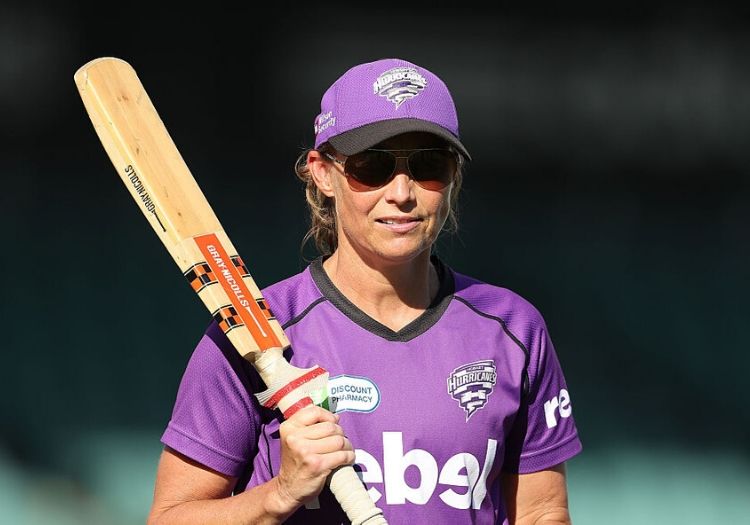

On a sun-soaked summer’s afternoon at New Hall School in Essex back in August, Julia Price is overseeing her US women’s team in a warmup match against Essex Women ahead of the T20 World Cup Qualifier in Scotland.
“Oh, catch that,” she whispers as the ball is hit out towards deep midwicket. With her team in the field, there is little more she can do for the time being, though her notepad never leaves her grasp as we begin a lap of the boundary’s edge. In an inexperienced side, every day is for learning.
Diving forward, the fielder appears to have the opportunity under control, but the ball pops free from her grasp and the chance goes begging.
“At least they’re hitting it to our field,” she laughs. The former Australia wicketkeeper is only half-joking. The traditional field setting for the off-spinner – long on, long off, deep cover, cow corner and deep square leg all patrolling the rope through the middle overs – is a sign of progress and learning.
Her role as head coach of the USA women's side is her latest in a line of projects within developing cricket nations; during her playing career in the early 2000s, she coached in both Scotland and the Netherlands, at a time before the women’s game was even close to professionalisation. The upshot was this, the chance to explore the sport’s global reach.
“I really enjoy this phase when the girls are just starting to come into the game and they just want to soak it all up,” she reflects, watching her charges bound around with an almost reckless enthusiasm across a warm, shadeless outfield. They will go on to lose the game by 14 runs. As for the World Cup qualifiers, they came up short, winning only against Namibia in a playoff for the wooden spoon. Still only a year on from beginning in the role, however, these remain early days.
“They are so keen and it’s quite refreshing to come into a group where everyone is just dying for information,” she adds.
Fast-foward four months and Price is preparing to blaze a trail for female coaches. She has been appointed by Brisbane Heat to assist Darren Lehmann for the second half of the Big Bash, with Ryan Harris leaving the team to oversee Australia’s side at the upcoming Under-19 World Cup in South Africa.
In doing so, she will be the first female coach to work in the men’s competition.
She joins a backroom staff also including former Australia allrounder James Hopes and Gavin Fitness, a long-time mentor to Heat captain Chris Lynn. Soon to add his own stardust to Heat’s campaign is AB de Villiers, who will replace Tom Banton for the second half of the tournament.
It is a unique opportunity for Price, a Women’s World Cup winner on two occasions during a nine-year international playing career, which finished in 2005.
Since then, she has been working on perfecting her art; quite simply, there are few who are better qualified than the 47-year-old, a former head coach for three seasons at Hobart Hurricanes in the Women’s Big Bash.
When Mark Robinson left his post as England Women head coach, Price’s name was linked with the role, only for Lisa Keightley, her former international teammate, to take up the position.
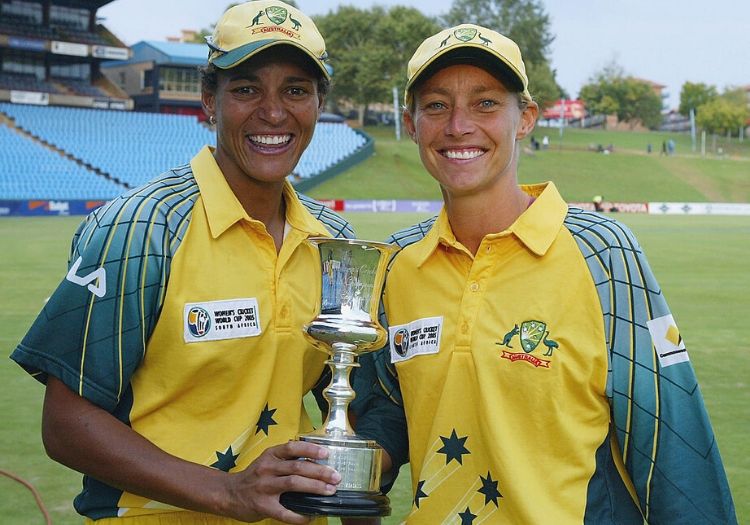
Price and Mel Jones were part of the Australia side that won the 2005 Women's World Cup
“We'd been chatting about whether there were some professional development opportunities for her through her USA role and we just went from there,” Lehmann said when the initial announcement was made.
“She has an excellent cricket brain and plenty of experience as a head coach, so I can see her fitting quite neatly into our set-up.
“We knew we had Ryan Harris with us for the start of the BBL before he goes to the U19 World Cup, but there was still a position available for us to fill on the coaching staff and we thought this was a great chance to innovate and think outside the box.
“I'm pleased the Heat have been able to go in a direction that we haven't seen yet in the BBL in having a woman on the coaching staff, but I don't believe it will be the last time it happens either.”
Between December 1997 and February 1999, Price was part of the Australia side that held a 20-year record for the number of consecutive ODI wins in women’s cricket.
Two weeks after that run came to an end, another one began. They would win 16 more games in a row through to the end of 2000.
It was a remarkable team; aside from Keightley, she lined up with Belinda Clark, Karen Rolton, Mel Jones and Cathryn Fitzpatrick.
It was only Meg Lanning’s all-conquering side two decades later that could usurp their level of dominance.
“I actually loved the period that I played through,” she remembers. “It’s really good for me because I went through the entire non-professional era and into the professional era.
“There weren’t really any excuses. We were as professional as the team that’s playing now. They are getting paid a lot more than we did, but at the same time we enjoyed the cricket thoroughly.
“We busted a gut to be as fit as we could be and we were world champions twice because of that. We were probably ahead of the game and, because of that, we were world champions.”
As Price looks back on her own playing career, there is not a single tinge of resentment towards those who have followed in her footsteps.
The game has changed beyond reasonable recognition since the days of Price’s debut, not least financially. For some context, Ellyse Perry was five years of age when Price made her international bow against New Zealand. Australia were beaten by 11 runs after being bowled out for 86.
Now, all Australian players receive the same base pay rate, regardless of gender, while Cricket Australia will top up the women’s side’s winnings at the T20 World Cup to ensure parity with the men’s equivalent figures. Elsewhere, a parental leave policy has been introduced.
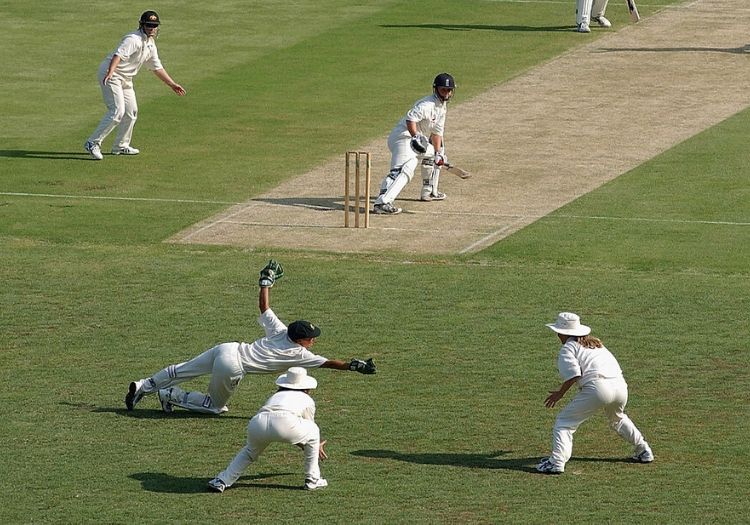
Price is set to become the first female to be part of the coaching staff of a men's Big Bash side
In the final T20 game of her domestic career against New South Wales, she faced Perry, then an opening bowler and lower-order batter. Her rise since Price’s retirement has, perhaps, epitomised the growth of the game in Australia better than that of any other player.
Quite possibly the finest female cricketer of all time, Perry's first international game came as a 16-year-old – after Price’s time had ended. Jodie Fields now kept wicket, but still under Rolton’s captaincy.
“We all knew that she was going to be good,” Price recalls. “I don’t know if we thought she’d be this good. I suppose it helped that she was getting assistance from Cricket Australia as an ambassador so she didn’t have to work and she could train as much as she liked.
“Her dad throws her a billion balls. I’m sure her husband probably does now as well. She’s an athlete. The fact that she played at such a high level of football as well shows that she has good commitment and time management.
“I didn’t think she’d be this good a bat. And I think she even prefers batting to bowling now, having come in as a bowler in the first place. Her commitment to perfection is time-consuming but, if that’s the result, it’s fantastic. She has done so much for the game – not just in Australia, but for the world.”
Even as we walk and talk – we never come close to completing our lap, Price never stops encouraging her American side, a group alive with diversity and striving for success amid a backdrop of full-time jobs and wider commitments.
“That desire, I can pass onto these girls,” she smiles. “I know you’re not getting paid the money. However, what extra can you do? Do you want to be a better person? It’s not about what you’re getting for it. It’s about what you want to get out of it.
“It’s a challenge for them because I have fairly high expectations, coming from semi-professionalism in Australia. Now they are competing on the international stage, they have got to understand that whether you are getting paid or not, you still have to step up in terms of what you can actually do.
“There’s quite a bit you can still do despite having a full-time job, despite having a family and kids. You can still actually find time to be that professional and that cricketer, which is going to help them in the long run.
“In Australia, you turn up and you know that everyone is going to be there on time and ready to train as opposed to standing and waiting for me to tell them what to do. You have them trained pretty well in Australia as to what they have got to be doing.
“You know they’ll be doing their fitness purely because a lot of them are getting paid enough that they don’t have to work.”
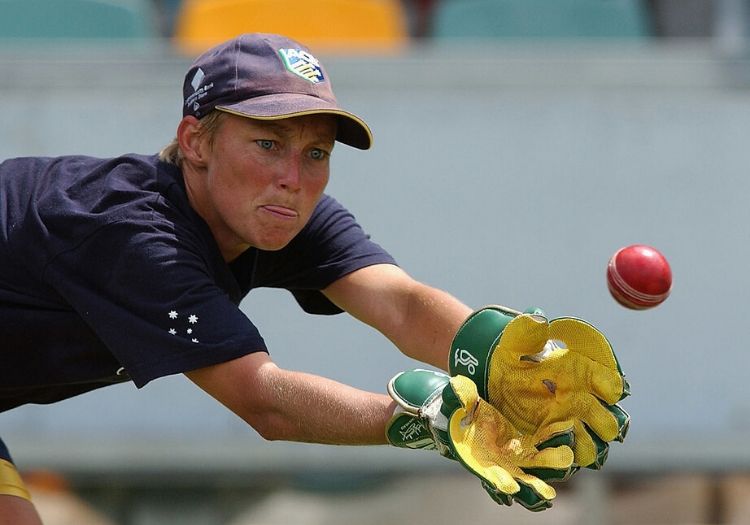
Price dives to her right to catch Claire Taylor during the 2003 Ashes Test
Her own journey has given her a unique empathy with her US players. Indeed, there was a time during her spell as coach of Tasmania and Hobart that her players held down other jobs. One was a doctor, another a physio.
“Here, we have a bit of a mixture,” she explains. “A business analyst, couple of schoolgirls, IT, one in the military. They’re all very bright. There’s a huge mix so I really enjoy being around the group.
“They are all very different and varied – different cultures as well, so that’s a bit of a new experience for me in this capacity. Obviously, I have had Hayley Matthews from the West Indies before [at Hobart]. Here, though, I’ve got a mixture of India, Pakistan, Caribbean – it’s a little bit more challenging.”
Her impact, though, has been immense. “She has been great,” says Sara Farooq, a production manager in a vitamin-manufacturing facility, and one of the national team’s more experienced players.
“I’m going to be honest. When you’re an associate nation and you’re working full-time and you’re not at school, it really gets tough. You have to look for that motivation and that drive. Yes, it is internal, but it helps when you have this person you can ask those questions to when you’re struggling. I think that’s been really good.
“I really like how she’s open and direct. You can really discuss your game plans with her and your feelings. It has given us more of a strategic planning style. I can see us getting better and I can see the big changes in us since she became our coach. Looking back and where I am now, I think that’s been a big part of it. It’s not just during the camp or the tournament – she’s trying to put something in place where we can have that drive.
“But I would say the biggest thing is that she actually brought back the fun into it. When you start to take it too seriously, you lose that fun. That’s been a great help for us.”
Price holds the role on a part-time basis, flying across the world from her Australia home to work with the squad once a month. In the meantime, the ICC has assisted with some funding for satellite coaches in her absence.
It is a complex job, given the sheer size of the country. There are players near the east coast in New Jersey and others on the west coast in San Francisco. The lack of a centralised programme has its obvious difficulties, as does the lack of club cricket available to women.
“I don’t feel they feel comfortable playing in the men’s competition, which is fair enough,” she explains. “But we need to start developing a women’s-only competition. That’s a key factor and a key challenge. Because they’re not learning by playing. It’s purely training all the time.”
And even that is by no means straightforward. The impeccable facilities of New Hall are a stark contrast to those available to many of her players. For some, the nearest nets might be two or three hours away.
It is a far cry from what she will oversee in the coming weeks as she becomes the first female coach in the history of Australia’s flagship tournament, sharing a dugout with de Villiers, Lynn and Lehmann.
It has been a roundabout route for one of Australian cricket’s most impressive figures.
Subscribe to The Cricketer for exclusive content every day: The inside track on England's Test tour with George Dobell in Pakistan, award-winning analysis, breaking news and interviews and the only place for in-depth county coverage all year round. Plus: An ad-free app experience at your fingertips. Subscribe to thecricketer.com today for just £1.

Welcome to www.thecricketer.com - the online home of the world’s oldest cricket magazine. Breaking news, interviews, opinion and cricket goodness from every corner of our beautiful sport, from village green to national arena.